Bare Metal Firmware Development

Firmware Engineered
at the Hardware Level

We provide bare metal firmware development services for embedded systems that need direct hardware control, deterministic timing, low memory overhead, and production-ready low-level firmware architecture.
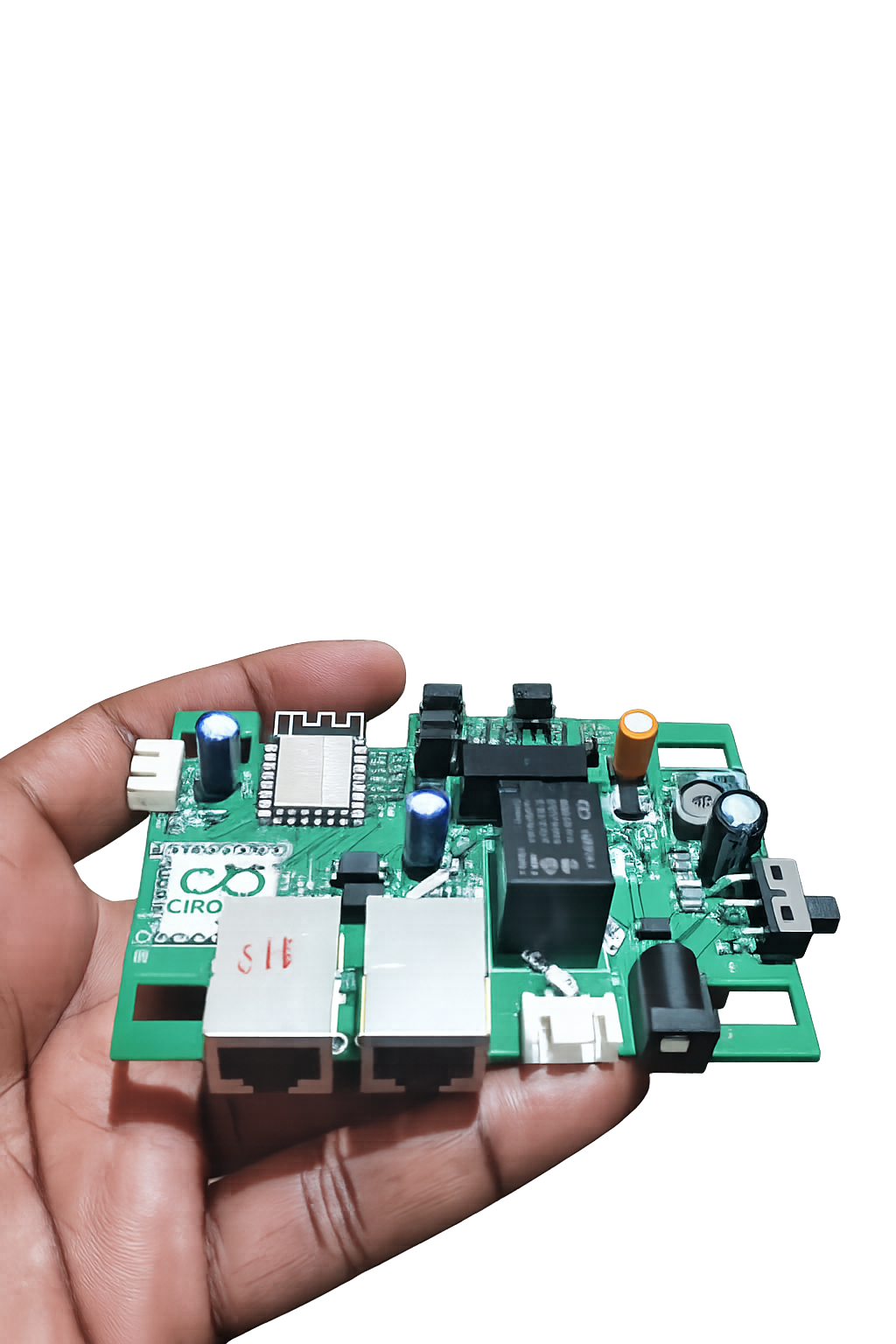
No OS Overhead Direct Register Access Cycle-Accurate Timing Real-Time Deterministic Minimal Footprint
Start Your Project Why Bare Metal
Bare Metal Firmware Development
ARM / RISC-V Architectures
<4 KB Boot Footprint
Real-Time Deterministic
Direct
Register Access
Zero
OS Overhead
<1 µs
Interrupt Latency
100%
Hardware Control

Technical Capabilities

What We Work With

Deep hardware expertise across peripherals, communication stacks, industrial interfaces, and embedded controllers.

Building bare-metal firmware demands expert knowledge of the hardware; from registers to memory maps. We bring that depth to every project we take on.

Processor & ISA Expertise ARM Cortex-M/A/R, RISC-V, x86 instruction sets and execution models
Memory Architecture Registers, SRAM, Flash, cache hierarchy, MPU/MMU configuration
Interrupt & Power Management NVIC priority design, low-power modes, clock gating strategies
Startup & Boot Sequences Vector tables, linker scripts, stack init, HAL configuration

Key Peripherals & Protocols

  • ✔ADC (Analog-to-Digital Converter)
  • ✔DAC (Digital-to-Analog Converter)
  • ✔Timer and PWM (Pulse Width Modulation)
  • ✔GPIO (General Purpose Input/Output), Relay control
  • ✔DMA (Direct Memory Access)
  • ✔External Interrupts & NVIC
  • ✔Watchdog Timers
  • ✔Real-Time Clock (RTC)
  • ✔Flash / EEPROM / NVM Controllers
  • ✔On-chip Bus: SPI, I2C, QSPI, 1-Wire
  • ✔Serial / Field: UART, RS232, RS485, CAN, LIN
  • ✔USB: FS / HS, OTG, CDC, HID, MSC
  • ✔Wireless: WiFi, BLE, LoRa, Zigbee, Thread, NB-IoT, 4G
  • ✔Ethernet: MAC/PHY, RMII/MII, TCP/IP stack
  • ✔Internet Protocols: HTTP, MQTT, CoAP, WebSocket, FTP
  • ✔4–20 mA input and output
  • ✔Voltage output 0–10 V input and output
  • ✔Impulse (Pulse) output
  • ✔HART
  • ✔Modbus, Profibus, DALI, LIN, etc.
  • ✔C
  • ✔C++
  • ✔Assembly (ARM, RISC-V, x86)
  • ✔Rust (Embedded)
  • ✔ST (STM32 series)
  • ✔TI (Texas Instruments)
  • ✔ESP32 / ESP8266
  • ✔NXP (i.MX, LPC, Kinetis)
  • ✔Microchip (PIC, AVR, SAM)
  • ✔Freescale
  • ✔Nordic Semiconductors (nRF series)
  • ✔TFT / LCD Display Controllers (SPI, Parallel RGB)
  • ✔OLED Displays (I2C / SPI SSD1306, SH1106, etc.)
  • ✔Segment LCD (numeric / alphanumeric)
  • ✔Touchscreen: Resistive & Capacitive (I2C)
  • ✔LED Matrix / WS2812 / NeoPixel
  • ✔Keypad & Button Matrix Scanning
  • ✔LVGL (Light and Versatile Graphics Library)
  • ✔Custom HMI Firmware & Menu Systems
Explore our Intuitive HMI Design service

Why Bare Metal

Why Choose Bare Metal Firmware?

Bare metal firmware eliminates OS overhead and gives your product a competitive edge in performance, power consumption, and reliability, qualities that matter most in production environments.

01
Maximum Performance

Direct hardware access with zero abstraction layers. Your firmware executes at full processor speed with deterministic, cycle-accurate timing.

02
Minimal Memory Footprint

No OS kernel or middleware consuming RAM or Flash. Every byte is deliberately allocated, enabling deployment on the smallest microcontrollers.

03
Deterministic Execution

Predictable, repeatable timing critical for safety-sensitive applications. Bare metal guarantees precise control over interrupt latencies and execution flow.

04
Full Hardware Control

Direct register-level access to every peripheral timers, DMA, clocks, and power domains enabling fine-tuned hardware behavior impossible with an OS.

05
Ultra-Low Power

Precise control over sleep modes, peripheral clocks, and wake events extends battery life in IoT and wearable products beyond what any OS scheduler can match.

06
Reduced Attack Surface

No OS means no OS-level vulnerabilities. Combined with secure boot and MPU protection, bare metal firmware is inherently more secure by design.

How We Work

Our Firmware Development Process

A structured, transparent process ensures your firmware ships on time, works reliably, and is maintainable long-term.

01
Requirements & Hardware Analysis

Datasheets, schematics, and system requirements reviewed before writing any code.

02
Firmware Architecture Design

Startup sequence, memory map, interrupt scheme, driver model, and power strategy defined.

03
Driver & Application Development

Peripheral drivers, HAL layers, and application logic built with clean separation.

04
Unit & Integration Testing

Each module validated with debuggers and logic analyzers before full integration.

05
Hardware-in-Loop (HIL) Testing

Full system testing on real hardware stress, edge cases, stability, and fault injection.

Production Ready Delivery

Source code, binaries, flashing scripts, and full technical documentation handed over.

Our Toolchain

Tools & IDEs We Use

We work with industry-standard development environments and debuggers the same tools used in aerospace, automotive, and medical device development.

■  IDEs & Compilers
Keil MDK (µVision)
IDE / Compiler
IAR Embedded Workbench
IDE / Compiler
STM32CubeIDE
IDE / HAL Generator
PlatformIO
Build & Package Manager
■  Debug & Verification
SEGGER J-Link / OpenOCD
Debug Probe / GDB Server
GDB / ARM GCC Toolchain
Debugger / Compiler
Logic Analyzers & Oscilloscopes
Hardware Verification
CMake / Makefile
Build Systems

Industries

Industries We Serve

Our bare metal expertise powers products across demanding industries where reliability, performance, and certification matter most.

IoT Devices

Connected sensors, gateways

Industrial Automation

PLCs, sensors, motor drives

Automotive / EV

ECUs, BMS, ADAS systems

Medical & Healthcare

Monitors, implants, diagnostics

Analytical Instruments

Spectrometers, lab equipment

Scientific Instruments

Sensors, measurement systems

Home Automation

Smart devices, lighting, HVAC

Consumer Electronics

Wearables, displays, audio

Water Treatment

Monitoring, dosing, control

Agritech

Soil, irrigation, automation

Environmental Controllers

Air, water, climate sensors

Deliverables

What You Receive From Us

Every engagement ends with a complete handover package your team can own, extend, and deploy to production with confidence.

Well-Commented Source Code Versioned in Git with a clean, readable commit history you fully own.
Binary Firmware Images .hex / .bin / .elf files ready for immediate flashing on your hardware.
Flashing & Programming Scripts Automated scripts for production line flashing, tested and documented.
Technical Documentation Architecture overview, memory map, interrupt table, and API reference.
Test Reports Unit, integration, and hardware-in-loop test results with pass/fail evidence.
OTA / DFU Update Mechanism Secure over-the-air or wired firmware update capability where applicable.
Post-Delivery Support Bug fixes, feature additions, and consultations after project completion.
Full IP Ownership Transferred No licensing fees, no lock-in the firmware belongs entirely to you.

Related Services

Explore Related Embedded Software Services

These embedded software services are often planned together when a product needs firmware, platform support, device integration, and operator-facing functionality.

Need Help Defining the Right Embedded Software Scope?

Discuss Your Project